

Reading Solana Like a Map: A Practical Guide to Solana Explorers and SOL Transactions
Okay, so check this out—I’ve spent a lot of nights poking around blocks and tx hashes. Wow! I had that first jolt when a token swap looked fine in my wallet but the explorer showed a program log that screamed “oops.” Initially I thought the network was misbehaving, but then realized the problem was my RPC node returning stale data and my instincts were only partly right. On one hand the UI is friendly, though actually the raw logs tell the far richer story, if you know where to look.
Whoa! Reading a Solana transaction can feel like decoding a receipt from another country. My instinct said “look at the signature first” and that usually points you to the canonical record, but sometimes you need to chase inner instructions to understand cross-program calls. Here’s the thing. You often want to inspect pre- and post-balances, because they reveal rent and lamport moves that the wallet UI hides. Those balance deltas explain somethin’ you might miss at first glance.
Seriously? Yes—really. When I started, I skimmed only the “status: confirmed” badge and called it a day. That was naive. Actually, wait—let me rephrase that: on some transactions the status is misleading unless you also check the block height, the number of confirmations, and the cluster health, which together give you confidence about finality in practical terms. If you trade or mint NFTs, that extra check matters more than you’d imagine.
Here’s the thing. Explorers like the one I lean on give you immediate access to the leaf nodes: signatures, accounts, instructions, and logs. Hmm… those logs are the secret sauce. You can see program return data, compute units used, and stack traces for smart-contract-like programs—though “smart contract” on Solana is different, since programs are deployed as native BPF binaries. On the technical side, tracing inner instructions is how you untangle multi-program workflows and spot where funds actually moved.
Whoa! There’s also the everyday ergonomics: search by address, transaction signature, or block. Medium-level users might prefer address histories; advanced users want traces. On my laptop I keep multiple tabs open: one for the account, one for the tx, and one for the block so I can triangulate. This is a habit I developed after losing minutes hunting for a missing token transfer that was actually a wrapped SOL unwrap gone sideways.
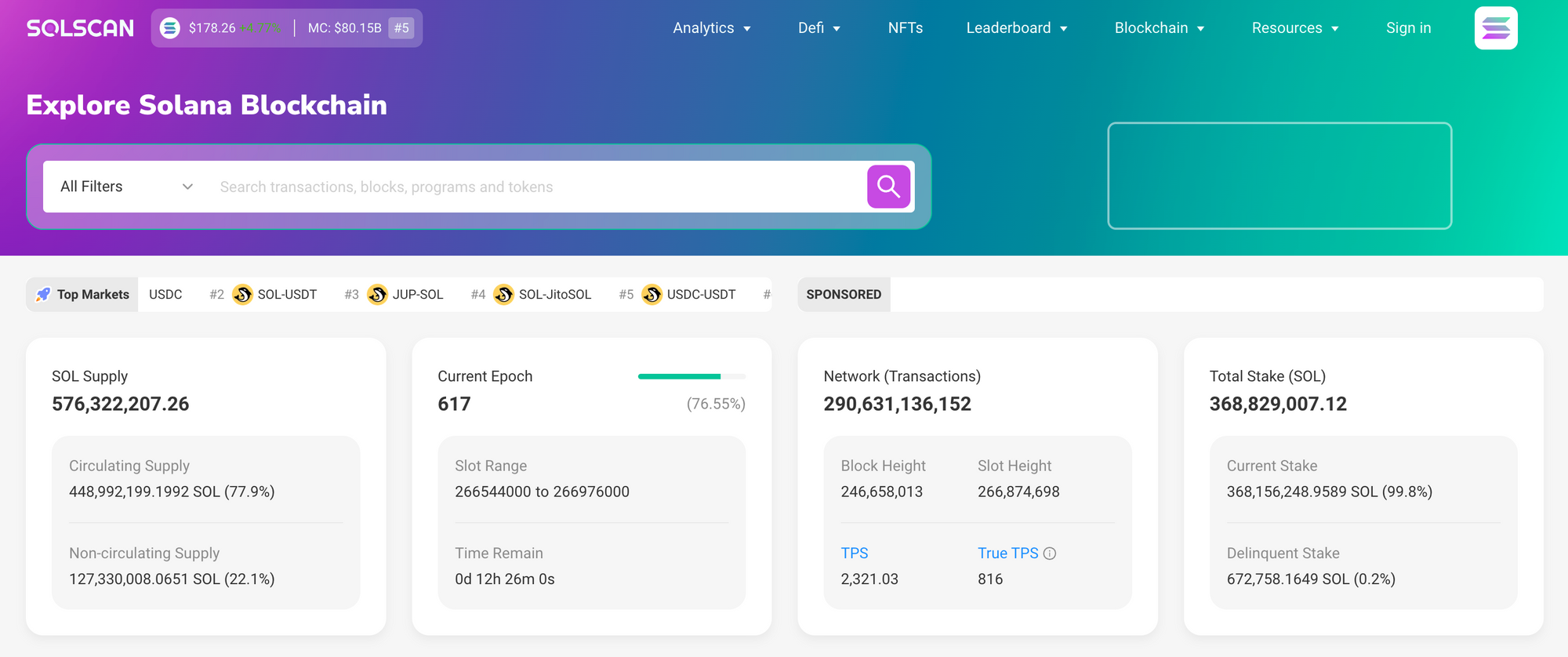
Why I recommend solscan as a starting point
I’ve tested several explorers and one that keeps surfacing in my workflow is solscan. Wow! It surfaces the guts—inner instructions, program logs, token balances—and it’s fast, which matters when you’re debugging a pending trade. On the technical side, solscan parses events and token metadata in a way that makes common patterns obvious, though it’s not perfect and sometimes metadata caches lag behind the chain. I’m biased, but its combination of readability and depth makes it my go-to for everyday investigation and for teaching newbies the anatomy of a Solana tx.
Really? Yes—the performance matters because Solana moves quickly, and lag can create confusion when a wallet thinks a tx failed but the chain later confirms it. My instinct said “trust but verify,” and that still works: cross-check the explorer with an RPC node response if you’re doing anything high-stakes. On the other hand, don’t waste cycles on every tiny transfer; cost-benefit matters. For casual transfers, a quick explorer check plus an eye on confirmations suffices for most users.
Hmm… Let’s get practical. Start by copying the transaction signature into the explorer search bar. Here’s the thing. Look for the status, the block time, and the slot number in that order to anchor your timeline. Then expand the instructions and read the logs; those logs frequently tell you whether an instruction hit an expected branch or errored out before a critical transfer. If you see “custom program error” or “insufficient funds” in the log, you have a direct lead to the cause.
Whoa! If you’re tracking tokens, inspect the token transfer instructions specifically. Medium detail: watch for delegate approvals, associated token account creation, and ATA rent exemptions. Long thought: because many wallets auto-create an associated token account behind the scenes, a failed mint might actually be a missing ATA or an account without enough lamports to cover rent, which means the transaction could revert or partially apply depending on program logic and runtime checks. That nuance is what trips up newcomers and even some seasoned traders from time to time.
Here’s the thing. Program logs sometimes include base64-encoded return data that you can decode to see structured results. That sounds scary, but it’s often straightforward JSON or a compressed field you can decode with a small script. I’m not 100% sure about every program’s encoding, but many token services and marketplaces follow common event schemas that make interpretation easier. So if a tx looks opaque, don’t give up; dig into the return data.
Initially I thought that simply checking the fee payer and estimated fee was enough to understand why a tx failed. But then I realized failure modes are varied: PDA derivation mismatches, wrong account owners, or exceeding compute budgets can all cause unexpected outcomes. Actually, wait—let me rephrase that: you should check compute units and logs, because a compute-budget exhaustion manifests differently than a permission error, and fixes are different. On one hand it’s frustrating; on the other hand, once you recognize patterns you can troubleshoot faster.
Whoa! Tools and tips you should use regularly. Short checklist: copy the tx signature, check slot and confirmations, expand instructions, read logs, look for inner instructions, verify token account addresses. Medium reminder: watch for race conditions on NFT mints and memos that get replayed; on mainnet-beta timing can be the difference between success and failure. Longer thought: you should also consider the cluster you’re on (devnet/testnet/mainnet), because an identical tx hash on devnet is meaningless for mainnet assets and mixing them up leads to wild goose chases.
Here’s what bugs me about some documentation—it’s either too terse or too academic. I’m biased toward pragmatic examples, and that’s why I often paste a real tx and annotate it when I’m teaching. Hmm… tangents: (oh, and by the way…) if you work with program logs a lot, consider keeping a small local library of common error signatures you encounter. It saves time and reduces that “what did I just read” pause during incident response, which is very very important when liquidity is on the line.
FAQ
How do I confirm a SOL transfer succeeded?
Check the transaction signature in an explorer, verify the status and the number of confirmations, then inspect the pre- and post-balances for the involved accounts. Wow! If the recipient’s associated token account shows the expected balance in post-state, that’s a good sign, though you should also verify block finality for high-value transfers.
What if a transaction shows “confirmed” but funds are missing?
First, don’t panic. Really? Often this is a UI cache issue or an ATA mismatch. Check the transaction logs for instructions that might indicate wrap/unwrap operations or transfers to unexpected accounts; then cross-check with a trusted RPC or indexer. If it still looks wrong, reach out to the program or wallet support with the signature and logs attached.
Which explorer should I use?
Use the one that balances speed and detail for your workflow—personally I frequently use solscan for digging into inner instructions and metadata because it surfaces the practical details I need quickly. I’m biased, but its interface helps bridge the gap between raw on-chain data and actionable insight.